
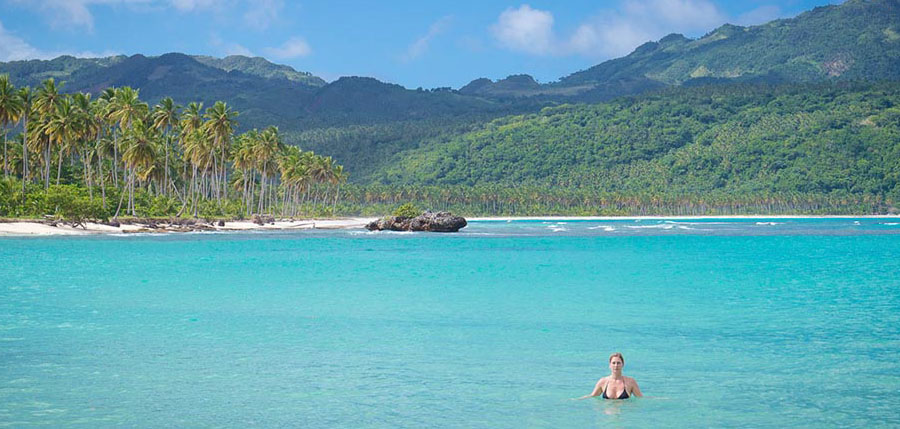
The Ultimate Guide To Your Dominican Republic Vacation
Overview of the country Arriving in the Dominican Republic What part of the country to visit? All-Inclusive resort, hotel or AirBnB -Where to stay Getting around the country Local culture Things to Do & See Safety Typical Costs Memories To Take Home With You (Dominican Souvenirs) Local Customs Things to bring with you
ARRIVING IN THE DOMINICAN REPUBLIC
There are 5 main airports and picking the airport that best suits your needs will depend on available flights from where you will be leaving, the cost of the tickets, and where you plan on spending your time in the Dominican Republic.
Here Is A List Of Airports And Areas They Best Serve:
- Santo Domingo Airport (SDQ): Santo Domingo, La Romana, Bayahibe, Las Terrenas, Samana, Las Galeras and Punta Cana.
- Punta Cana Airport (PUJ): Punta Cana and Bayahibe
- La Romana Airport (LRM): La Romana, Bayahibe, and Punta Cana
- Santiago Airport (STI): Santiago, Cabarete, Sosua, and Puerto Plata
- Puerto Plata Airport (POP): Cabarete, Sosua, and Puerto Plata
Quick Overview of the Dominican Republic
Location: Located in the Caribbean on the island of Hispaniola, which is part of the Greater Antilles group of islands. Hispaniola is shared with Haiti, with the Dominican Republic making up about 3/5 of the island and Haiti the other 2/5.
Population:
- Country 10,627,165
- Santo Domingo metro (the capital city) just fewer than 3 million
- 2nd largest metro area Santiago de los Caballeros, about 1 million
Language: Spanish is the official language, but in tourist areas English, French, Italian and German are spoken as well.
Time Zone: The Dominican Republic observes Atlantic Standard Time (UTC−4) year-round. It shares the same time as New York and Miami during U.S. daylight saving time and is one hour ahead during U.S. standard time.
Climate: The climate is consistent throughout the year with its coolest months being December through February with highs of 86 F / 30 C and lows of 68 F / 20 C. Its hottest months are July through October with highs of 90 F / 32 C and lows of 72 F / 22 C.
Currency: The currency of the Dominican Republic is pesos (DOP), but in tourist areas most places will accept euros and US dollars as well.
Typically for cost, flight options and ease of travel, the Santo Domingo Airport, Punta Cana and the Santiago airports are the 3 main airports that visitors enter. Entry requirements depend on your nationality, travel documents and immigration status. Many visitors, including tourists from the United States, Canada, the United Kingdom and the European Union, do not need a tourist visa. Passengers entering or departing on commercial flights must complete the free official e-Ticket form. Check the Dominican Republic’s official entry requirements before travel.
WHAT PART OF THE COUNTRY TO VISIT
This may be the question that you contemplate the longest. The country/island is divided into 6 primary areas for visitors.
- Punta Cana – Beaches & All-Inclusive Hotels
- La Romana & Bayahibe – Beach towns with quaint hotels, all-inclusive resorts & lots of AirBnbs
- Samana Peninsula – Sleepy beach towns with great views, great wide beaches (not overly crowded), and great restaurants. It has several all-inclusive resorts and lots of hotels and AirBnbs.
- The Mountains –The towns of Jarabacoa and Constanza have quaint hotels, AirBnBs, fantastic views, winding rivers, and cool evenings
- The North Coast (Cabarete, Sosua, Puerto Plata) – Known for kite-boarding and ocean sports
- Santo Domingo – The 1st city in the New World, capital city of the Dominican Republic (lots of culture, restaurants, and nightlife, with beaches on either side of the city)
PUNTA CANA
PROS
- #1 destination for visitors
- Airport close by
- Many all-inclusive hotels to choose from
- Many tours and excursions
- Convenient
- English is spoken by many
- Great beaches
CONS
- Lacks the culture of the island/country
- All-inclusives with low quality food and drink
- Lots and lots of drunk tourists
LA ROMANA & BAYAHIBE
PROS
- 3 airports to choose from (Santo Domingo, La Romana & Punta Cana)
- A good mix of quaint hotels, AirBnBs, and all-inclusives
- Local culture
- Great diving and boating adventures on the Caribbean Ocean, great beaches
- English speakers in the tourist areas
CONS
- Downtown La Romana is not set up for tourists (stick to the beach areas)
- Sorry, I don’t have any other cons – this is a great place (esp. Bayahibe)
SAMANA PENINSULA
PROS
- Lots and lots of beautiful public beaches with white sand and blue-ish green water to enjoy
- Safe & Relaxing
- Whale watching, waterfalls, national parks and many other excursions
- 3 great small towns (Las Terrenas, Samana, & Las Galeras)
- Las Terrenas has a wonderful downtown with lots of restaurants, beaches, etc.
- Does not have hotel after hotel after hotel (opposite of Punta Cana)
- Lots of wonderful restaurants to choose from
CONS
- 2-hour drive from the airport (but it is a pretty drive)
- Sorry, I don’t have any other cons – this is a great place – my personal favorite
THE MOUNTAINS
PROS
- Great views
- Rivers & Mountains
- Very relaxing
- Not as hot
- Highest point in the Caribbean – Duarte Peak
CONS
- No beaches
- Not what people think of when they think Caribbean vacation
THE NORTH COAST
PROS
- #1 Kite-surfing location in the world
- Surfing and other water activities
- Great beaches
- Lots of good Dominican restaurants and nightlife to be found in the 3 main towns – Cabarete, Sosua, Puerto Plata 27 waterfalls, parks & Ziplining and many other excursions
- Has a good mix of all-inclusive resorts, hotels and AirBnBs
CONS
- On the Atlantic Ocean side of the island (some people want to be on the Caribbean side of the island since they are going to the Caribbean)
- Very windy (if you’re not kiteboarding)
- Parts can be a little seedy / sketchy at night (only a little in certain spots)
SANTO DOMINGO
PROS
- Lots and lots of history
- Great variety of restaurants from very affordable to luxury
- The Colonial City (1st city of the New World)
- Best place to experience the culture of the country
- Large international airport
- Very safe tourist area (the Colonial Zone)
CONS
- No beach in the city – must drive out of the city to get to a beach
- Driving is complicated in the city & lots of traffic
- Some rough areas as in all big cities
SANTO DOMINGO AIRPORT TRANSPORTATION – RATED – #1 BY TRIP ADVISOR
Safe, Secure, Comfortable & English-Speaking Transfers
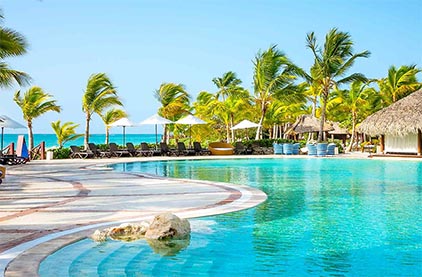
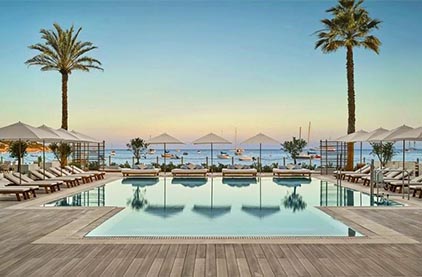
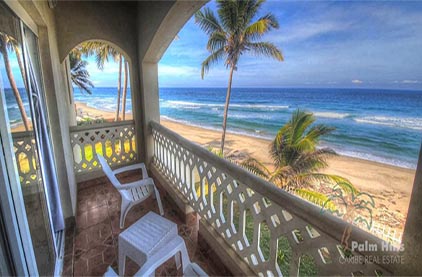
ALL-INCLUSIVE RESORT, HOTEL OR AIRBNB -WHERE TO STAY
You have 3 main choices:
- All Inclusive Resorts
- Hotels / Resorts (non all inclusive)
- AirBnB Style rentals
ALL-INCLUSIVE RESORTS
PROS
- One fixed price
- Simpler
- Family friendly (pool, beach, food and drinks all on-site)
- Secure
- Usually have employees who can speak all the major languages
- English is spoken by many
- Great beaches
CONS
- Lots of tourists overindulging on alcohol/food
- Usually found far from culturally significant places
- Not the real feel of the country
- Lower quality food and drink
HOTELS/RESORTS (NON-ALL INCLUSIVE)
PROS
- Often located in sought-after destinations
- Allows you to experience the culture of the country a little easier
- You won’t feel as obligated to stay on the property (means you can explore the culture and experience the island)
- Good security
CONS
- Will need to eat out for most meals
- While the front desk can help, you are less cared for than at an all-inclusive resort (this may not be negative, but if you want an activity planner, etc. you will want an all-inclusive)
AIRBNB STYLE RENTALS
PROS
- Allows you to rent a private house, condo, etc.
- Can cook at your rental or eat out
- Not a hotel
- Private
CONS
- Least secure option
- Less assistance than hotel and all-inclusive
GETTING AROUND THE COUNTRY
If done correctly, this is very safe, but the #1 cause of harm to tourists is the travel between the various locations, whether it be from the airport to the resort or a hotel to dinner. Because this represents the #1 cause of harm to tourists, I am going to go into a little more detail on this subject.
The main ways to move around are the following:
- Private taxis
- Shared Transfers
- Higher-end buses
- Buses (what the locals use)
- Public Cars (Carro Publicos) – not to be used at all
For disclosure, I own a transportation company in Santo Domingo. I am an American who moved here, and, after being here for a short-time, I quickly realized that even though the island is saturated with tourist transportation companies, there was a huge need for a safe and professional company that understands the needs of visitors.
Shared Shuttles – A shared shuttle may suit solo travelers, but compare the full cost for your group with a private transfer and check the pickup arrangements.
Shared shuttles may wait for other passengers and stop at several destinations. These arrangements can add travel time, so check the expected schedule before booking.
Higher End Buses – Intercity buses generally require separate connections between the airport, bus terminal and your accommodation. Compare the current bus fare together with those connecting transfers when calculating the total cost.
The other issue with the buses (no matter which company you use) is that, because the cost of vehicle ownership is out of range for many Dominicans, they are the main means of transportation around the country. The buses will pull over on the side of the road and let passengers off at any time they want.
The value of an intercity bus trip depends on your route, group size and the distance between the terminal and your accommodation. Include all connecting transport in your comparison.
Local Buses – Very inexpensive to use, but often are overcrowded with makeshift seats being added in the aisle, no air-conditioning on many of them, older models, lacking proper maintenance and typically nowhere to store your large luggage. These buses make very frequent stops.
Since I had never used one, I wanted to before I wrote this article. I took one of these buses from Santo Domingo to Bayahibe – a 1 ½ hour drive by car. With all the stops it took over 4 hours to arrive at Bayahibe, and halfway there, they made us get off that bus and onto another bus so they could fill one bus up fully.
I would highly advise against this mode of transportation. The only reason I write about this is because I read so-called “experts” online talking about using this mode of transportation. Yes, you can use it, yes you can save money, but no, it is not worth it when you are on vacation. (my opinion).
Public Cars (Carro Publicos) – Under no circumstances should this mode of transportation be used. These are cars that are very old and lack maintenance. I have seen cars without brake lights, headlights, etc. They never have air-conditioning and the driver will pack 6 people in a 1980 Honda Civic.
These cars drive specific routes in cities and towns, and local journeys can require more than one connection. Consider comfort, vehicle condition and space for your luggage when choosing transportation.
This is another mode of transportation I only talk about so you know not to use it. I read lots of people talking in online forums about this mode of transportation when they want to sound like an Expert on travel in the Dominican Republic.
TO SUMMARIZE
Higher-end buses and shared shuttles can be useful options, depending on your route and group size. Compare their complete cost, connections, waiting time and luggage arrangements with a private transfer.
Private Transfers are very safe, the quickest and simplest transfers, but also the most expensive (but not by much unless you are traveling alone) Local Buses and Carros Públicos – Should be avoided no matter the savings. They are uncomfortable and not safe.
LOCAL CULTURE
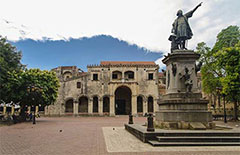
HISTORY Santo Domingo’s Colonial City preserves some of the earliest European buildings in the Americas and is recognized as a UNESCO World Heritage Site.
While there are many places throughout the country that have historical sites, there is no better place to explore the Colonial times than in Santo Domingo, the Colonial Zone, a World Heritage Site.
We know most people come to the Dominican Republic to enjoy the Caribbean beaches, but the Colonial City should be a must see on your vacation. You can follow this link to learn more about exploring the Colonial City.
Food & Drink
From fresh locally caught fish and seafood to the multiple ways plantains are used in cooking, no vacation would be complete without sampling some of the local cuisine. Since food and drink are important to the local culture and to a vacation, we have created a special article on the Dominican cuisine.
A classic Dominican meal while at the beach is whole fish and plantains. While the sun is setting on your day at the beach, as the classic sounds of bachata, merengue and salsa come alive, there is no more perfect way to end your day than to enjoy a classic meal of whole fish with plantains with either a beer or rum in your hand.
The Dominican Republic has many and varied fresh fruits that are made into flavorful natural juices or smoothies (batidas in Spanish). Pineapple, passion fruit, papaya and mango are some of the many fruits that can be found on this island.
Adults can enjoy the very popular Presidente beer or one of the country’s many fine rums in either a frozen drink like a Pina Colada or a simple rum and coke.
THINGS TO DO AND SEE (TOURS & EXCURSIONS)
This depends on what part of the Dominican Republic you arrive at and where you are staying. There are three tours/excursions that set themselves apart from the rest of the tours – each for their own unique reasons: history/culture, raw beauty and magnificent nature.
Isla Saona Excursion
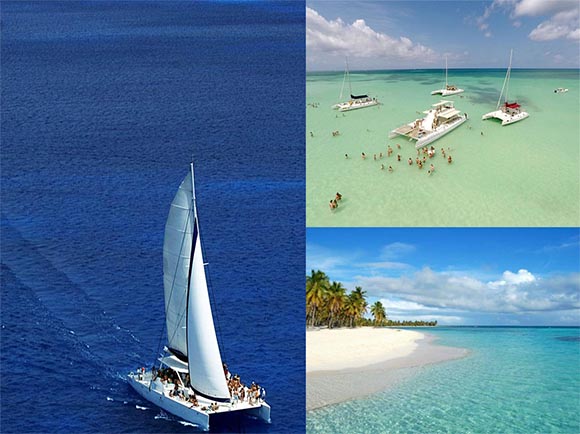
There is no better way to experience the raw beauty of the blue-ish green waters and the coral reefs than to experience it onboard a catamaran sailboat while sailing along the Caribbean Ocean toward the island of Saona (Isla Saona).
On Isla Saona you will then disembark and enjoy the white-sandy beaches, palm trees and blue-ish green water. For more information on the Isla Saona Excursion.
The Colonial City / Colonial Zone
The Colonial City of Santo Domingo, a UNESCO World Heritage Site, is the first city in the new world and full of history, culture, wonderful old buildings and streets that shouldn’t be missed. The Colonial City is known for its early colonial buildings and grid street plan.
The streets and the buildings date back to the early 1500’s, and in the present day many of the original buildings are still standing along with them are a few ruins that are waiting for you to explore them. For more information on the Colonial Zone Tour.
Whale Watching
This excursion makes for a very distinctive experience. With the backdrop of the beautiful Samana Bay and rolling countryside you can witness one of the largest migrations of humpback whales in the world. These magnificent whales come to give birth here along the coastal waters – making them easy to spot.
This makes our top 3 because of the truly unique and rare experience it presents. Whale-watching excursions in Samaná Bay generally run from mid-January through late March. If you visit during this period, confirm current dates and availability with your tour operator.
Here are a few suggestions of tours and excursions in various areas:
SANTO DOMINGO
- Colonial City Tour
- Isla Saona
- Rum and Cigar Tour
PUNTA CANA
- Hoyo Azul (The Blue Hole)
- Party Boat off the Punta Cana coast
- Dolphin Experience
- Monkey Land
SAMANA/ LAS TERRENAS / LAS GALERAS
- Whale Watching
- Los Haitises National Park
- El Limon Waterfall
LA ROMANA
- Colonial City Tour
- Isla Saona
- Rum and Cigar Tour
NORTH COAST
- 27 waterfalls
- Zip Lining
- Kite Beach (World famous)
BAYAHIBE
- Colonial City Tour
- Isla Saona
- Rum and Cigar Tour
SANTO DOMINGO AIRPORT TRANSPORTATION – RATED – #1 BY TRIP ADVISOR
Safe, Secure, Comfortable & English-Speaking Transfers
SAFETY
As an American living here for the past 8+ years who has also been responsible for assisting thousands of visitors while they are on vacation, I recommend a few practical precautions for your visit. The following suggestions can help you plan your trip.
Keep large amounts of cash and valuables out of sight while exploring. Plan how you will travel between your accommodation, restaurants and activities.
It is suggested not to use your cell phone while walking around and to keep your money in your pocket till you are in the store or restaurant where you need to use it. In popular visitor areas, stay aware of your surroundings. If you like to go off the beaten path, be careful about which streets you choose to walk down at night. It is suggested to use taxis for transportation at night.
COSTS
With such wide-ranging options (street-food to high-end restaurants, basic hotels to 5-star resorts), it is hard to provide exact costs, but I wanted to point out a few things that make up the costs, so you are aware of them.
One of the main points to understand is that the Dominican Republic has a consumption-based tax system with taxes on staples such as: rice, bread, etc., at 0% tax all the way up to the maximum of 18% for luxury items such as: restaurants, steak, lobster, televisions, etc.
You will find most base prices to be very reasonable and the price with tax to be reasonable across the range of purchases, but please remember to add the tax on to make sure you understand your full purchase price before you buy.
Transportation – Costs vary with your route, vehicle, tolls and service. Compare complete quotes and check what is included before booking.
When comparing providers, look for well-maintained vehicles, clear reservation details and professional service. Price alone does not establish the quality or safety of a transfer.
All-Inclusives – While these vary in price, typically the main difference in the various prices will be the quality of food and drink.
Restaurants – The prices of the food will vary depending on if you are at a fine restaurant, etc., and most visitors will find the prices on the menu to be very reasonable. On top of this very reasonable price, there is 28% added to the bill above the menu price (an 18% government tax – explained above and a 10% legal service charge). The legal service charge is distributed to employees and is separate from any voluntary tip.
While many countries/cities around the world have a tax that is added to the bill, it is not usually 18% and most restaurants include the cost of labor in their menu prices, not as an added surcharge at the end so I felt this was worth mentioning.
Still, at the end of your meal you should find your overall charge to be reasonable, just 28% higher than the prices on the menu, but still very reasonable.
Street Markets – We have thriving street businesses, including food vendors and stalls selling art, jewelry and other items. These businesses will often be the cheapest as they are not collecting the sales tax, but don’t expect jewelry, etc., to be authentic and real.
MEMORIES TO TAKE HOME WITH YOU (DOMINICAN SOUVENIRS)
No vacation is complete without taking home a few memories and gifts for friends & family. Practically every corner will have someone selling something, but we like to note a few items for their cultural or historical value. We have written an article specifically on Dominican souvenirs that you can read as well and will be a little more in-depth.
Jewelry Larimar – is exclusively found in the Dominican Republic and has a color spectrum of white, light-blue, blue, and green-ish blue. Not only is Larimar a unique stone, but each stone is unique based on its color pattern. Prices vary with the stone’s size, color, quality and setting.
Blue Amber – Amber is another option to look for when shopping for Dominican jewelry, including pieces described as blue amber. Prices vary with the stone, its quality and the setting.
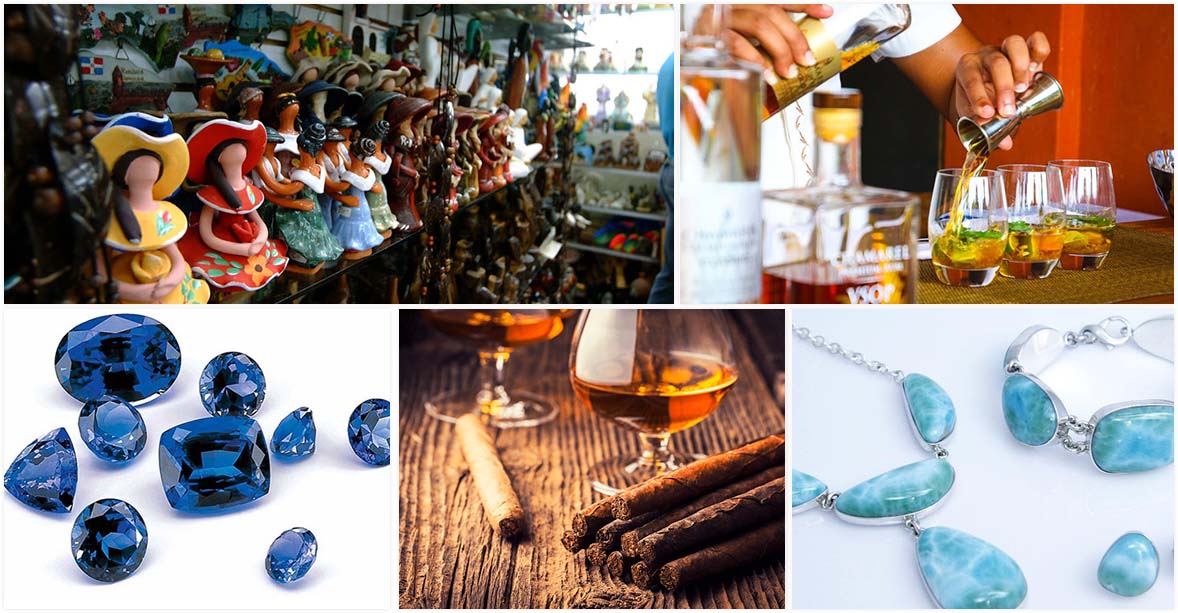
Mamajuana – The drink of the Dominicans. This drink combines 12 spices and herbs, wine, honey and rum (of course Dominican Rum) as the base. Mamajuana to Dominicans is like barbecue sauce or chili is to Americans. Everyone has their own unique way of mixing their mamajuana to achieve that perfect flavor.
What makes this a great souvenir to take home is not only will it be the conversation of your next party, but the spices and herbs only get better with time. Keep the bottle for years to come and all you have to do is add more rum, honey and wine. I have had my bottle for 8+ years now. My advice is to buy a big bottle of the mamajuana as it will go fast at your next party.
Art – If you are interested in art you can find wooden statues, paintings, ceramics, etc. Some of these paintings and statues will not have the faces completed. This is meant to show that not just one face can represent the Dominican people – that the history of the Dominicans is vast with heritage coming from Africa, Spain, France, Haiti, and England – to name just a few countries.
rum – Two of the most popular rums produced in the Dominican Republic are Brugal and Barceló. With bottles ranging from light to dark, aged and very aged, there is sure to be a bottle that calls your name.
cigars – Perhaps one of the most important countries in the world for cigars. The Dominican Republic will have a wide range of cigars from La Aurora dating back over 100 years, to Arturo Fuente whose cigars are consistently ranking as one of the world’s best cigars by Cigar Aficionado Magazine, and La Flor, the preferred brand of the Dominican dictator Rafael Trujillo.
LOCAL CUSTOMS
Friendly Culture – Dominicans in general are very friendly. If you need something, ask. They will do their best to help you, but depending on where you are visiting from, some things might make you think otherwise.
Personal space is not as important here. So that means people might not be as quick to get out of your way, they brush alongside you as they are walking or flat out just don’t move. Just ask politely and they will move out of your way with a smile.
Also, the Dominican Republic is a very formal country with their interactions. Dominicans always greet each other by shaking hands. Always feel free to start your conversation with a handshake – even with young children.
Tipping – Dominicans tip Dominicans when they have the money to do so. With salaries being so repressed in this country a couple of extra dollars for your waiter, etc., can go a long way. With or without a tip you are sure to receive excellent customer service, but if you can spare a few dollars, you will see just a little bit bigger smile from the person helping you. Eating out at restaurants is not meant to be hurried in this country, and, since you are on vacation, order some food, sit back and talk with the company you have with you. If you are in a hurry, you will not enjoy your experience while eating out.
Loudness /Music / Horns – part of the culture. Just like personal space Dominicans don’t put as much emphasis on noise pollution as many countries do.
time – Dominican time is a real thing. Usually running about 10 or 15 minutes behind. If you need to be somewhere on time – like the airport for your flight out, make sure your driver will be there on time.
Clothing – No matter how hot it is outside you will see many Dominicans in pants and button-down shirts. The Dominicans take great pride in professionalism and to them long pants and a nice button-down shirt reflect their professional values.
THINGS TO BRING WITH YOU
Sunscreen – as it is hard to find here and usually expensive.
Money to exchange – ATM withdrawal limits and fees vary by machine and bank. Check your bank’s charges and the fees shown on screen before confirming a withdrawal.
Mosquito spray – Typically the breeze is strong enough so they don’t land on you, but if the breeze drops you may want to use a little spray.
Comfortable shoes to walk around in – With so much to explore, a comfortable pair of shoes can really make a difference.
Adventurous attitude – From the first city of the New World to waterfalls, rivers, beaches and national parks, there is a lot to see outside the walls of the all-inclusive resorts. Make sure to pick one or two places to explore in between the time at the beach.
CONCLUSION:
The Dominican Republic is a great place to consider for your next vacation because not only can it offer you some of the best beaches in the world and culture only like the oldest city in the New World can offer, but the Dominican Republic offers this to you at an affordable price. With a few of the precautions mentioned in this article, some local food and drink, and, of course, a sublime beach as a backdrop, you can make the Dominican Republic a vacation to remember for years to come. Bonus: I have helped thousands make their Dominican vacation memorable, and, while this is my job, feel free to contact me even for free advice. I/we are here to help anyone who wants it – whether it is just some friendly suggestions over the phone or through a tour or excursion by my company. Please let me/us know what we can do to make sure your vacation is filled with wonderful memories.